Silent Symptoms of Heart Disease That Most People Ignore
October 23, 2026
admindrshridhar
0 Comments
Silent Symptoms of Heart Disease That Most People Ignore
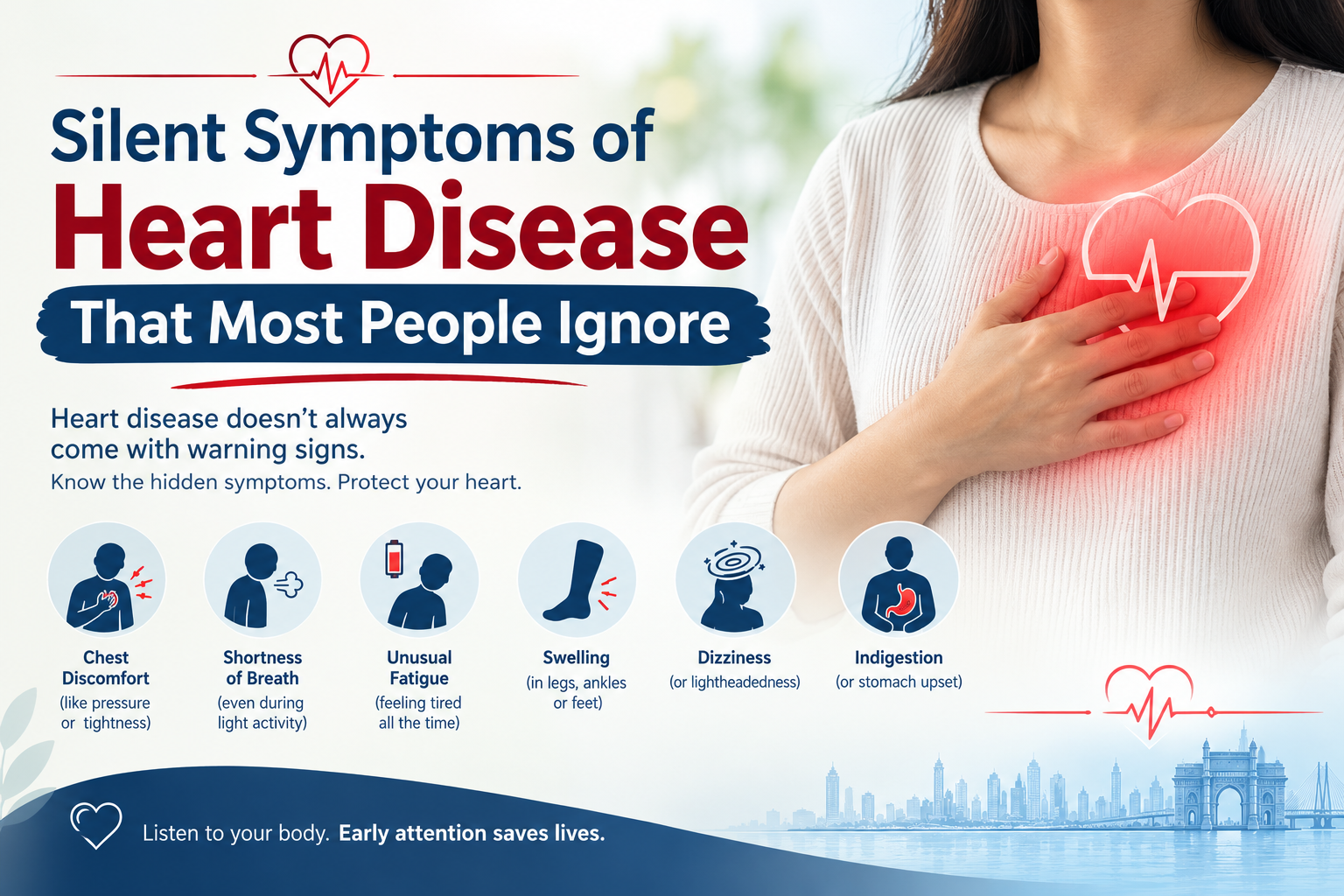
Heart disease does not always begin with severe chest pain or sudden breathlessness. Sometimes, the warning signs are subtle, such as unusual fatigue, difficulty climbing stairs, mild chest discomfort, or swelling in the feet. Recognising these symptoms early can help people seek medical attention before a potentially serious heart condition progresses.
In a busy city like Mumbai, where long commutes, demanding work schedules, stress, and irregular routines are common, it is easy to dismiss these changes as tiredness or ageing. However, understanding the silent symptoms of heart disease can help you make informed decisions about your cardiovascular health.
What Are the Silent Symptoms of Heart Disease?
Silent symptoms are mild, unusual, or easily overlooked changes that may indicate an underlying heart problem. Some people experience few or no noticeable symptoms until the condition becomes advanced. Heart disease can affect people of different ages and fitness levels, including those who appear healthy.
Not every symptom indicates a heart condition, but persistent, unexplained, or recurring symptoms deserve medical evaluation.
7 Silent Symptoms of Heart Disease You Should Never Ignore
1. Unusual Fatigue Without a Clear Reason
Feeling tired after a demanding day is normal. However, persistent exhaustion that does not improve with adequate rest may sometimes be associated with a heart condition.
When the heart cannot pump blood effectively, the body’s tissues may not receive enough oxygen-rich blood. This can contribute to weakness, reduced stamina, or difficulty completing everyday activities.
If you regularly feel exhausted despite sleeping well, especially when performing tasks that were previously easy, consult a healthcare professional.
2. Breathlessness During Everyday Activities
Getting unusually breathless while walking, climbing stairs, or performing routine household work can be a warning sign of a cardiovascular problem.
Breathlessness may occur when the heart struggles to meet the body’s demands or when fluid accumulates because of certain heart conditions. It can also have lung-related or other medical causes.
In Mumbai, people may attribute breathlessness to traffic pollution, crowded commutes, or a lack of exercise. If it is new, worsening, or accompanied by chest discomfort, dizziness, or sweating, it should not be ignored.
3. Mild Chest Discomfort or Pressure
A heart-related problem does not always cause intense chest pain. Some people experience pressure, heaviness, tightness, burning, or discomfort that comes and goes.
The sensation may occur during physical activity, emotional stress, or even at rest. It may also be mistaken for acidity, indigestion, or muscle strain.
Recurring chest discomfort, particularly during exertion, requires prompt medical assessment. Do not assume that mild pain means the problem is harmless.
4. Pain in the Arm, Shoulder, Neck, Jaw, or Back
Heart-related discomfort can sometimes spread beyond the chest. Pain or pressure may be felt in one or both arms, the shoulders, neck, jaw, or upper back.
These symptoms can be subtle and may occur without obvious chest pain. Some people, particularly women, older adults, and people with diabetes, may experience less typical symptoms during a heart attack.
Sudden unexplained discomfort in these areas, especially when accompanied by breathlessness, nausea, sweating, or weakness, needs emergency attention.
5. Dizziness, Light-headedness, or Fainting
Occasional dizziness can have several causes, including dehydration, low blood pressure, or medication effects. However, repeated light-headedness or unexplained fainting may sometimes be linked to abnormal heart rhythms or other cardiovascular conditions.
Seek medical advice if dizziness occurs repeatedly, during physical activity, or alongside palpitations or breathlessness. Sudden fainting with chest pain or severe breathing difficulty requires emergency care.
6. Swelling in the Feet, Ankles, or Legs
Persistent swelling in the lower legs may develop when fluid accumulates in the body. In some cases, this can be associated with heart failure, particularly when accompanied by breathlessness, fatigue, or difficulty breathing while lying down.
Swelling can also result from vein problems, kidney conditions, medications, or prolonged sitting and standing.
If swelling is new, persistent, or worsening, arrange a medical assessment rather than assuming it is simply caused by a long day at work.
7. Palpitations or an Unusually Fast Heartbeat
Palpitations are sensations of a racing, pounding, fluttering, or irregular heartbeat. They may occur because of stress, caffeine, certain medications, or an abnormal heart rhythm.
Occasional brief palpitations may not indicate serious disease. However, repeated episodes, especially with dizziness, chest discomfort, fainting, or breathlessness, should be evaluated.
A clinician may recommend tests such as an electrocardiogram (ECG) or heart rhythm monitoring, depending on your symptoms.
Why Can Heart Disease Go Unnoticed?
Several factors can make cardiovascular disease difficult to recognise in its early stages:
High cholesterol may not cause noticeable symptoms while plaque builds up in the arteries.
High blood pressure often has no obvious warning signs.
Diabetes can increase cardiovascular risk and may affect how heart attack symptoms are experienced.
Family history may increase risk even in people who maintain a healthy lifestyle.
Smoking, tobacco use, physical inactivity, and poor sleep can contribute to cardiovascular problems.
Some heart rhythm disorders and coronary artery conditions may cause intermittent or subtle symptoms.
Looking healthy does not necessarily mean that your heart is healthy. Regular health checks and appropriate testing can help identify risk factors before complications develop.
When Should You Consult a Cardiac Surgeon in Mumbai?
Consider seeking medical advice if you experience persistent fatigue, unexplained breathlessness, recurring chest discomfort, reduced exercise tolerance, or other symptoms that may indicate a heart problem.
A cardiac specialist can assess your symptoms and determine whether further investigation or referral to a cardiac surgeon is necessary. Depending on your medical history and examination, tests may include an ECG, blood tests, echocardiography, or other investigations.
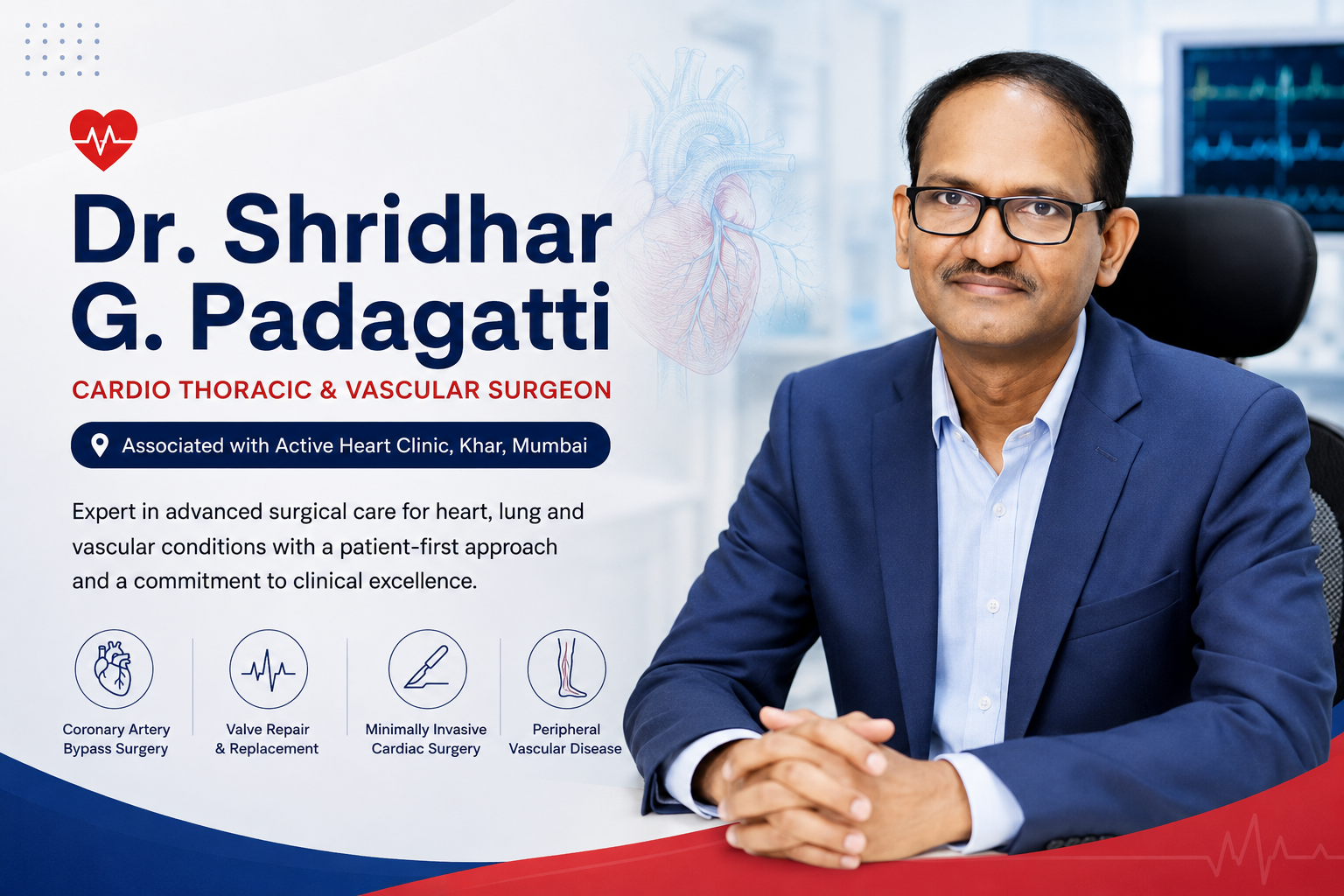
If you are looking for a cardiac surgeon in Mumbai, Dr. Shridhar G. Padagatti at Active Heart Clinic in Khar West provides cardiac and vascular surgical consultations. The appropriate specialist and treatment pathway will depend on your diagnosis and individual needs.
People travelling from Bandra, Santacruz, Juhu, Andheri, or other parts of Mumbai should not delay urgent medical assessment simply because of distance or a busy schedule.
How Can You Protect Your Heart Health?
You can support your cardiovascular health through practical, consistent habits:
Monitor blood pressure, cholesterol, and blood sugar as recommended by your healthcare professional.
Eat a balanced diet rich in vegetables, fruits, whole grains, and other nutritious foods.
Engage in regular physical activity suited to your health and fitness level.
Avoid smoking and tobacco products.
Maintain a healthy weight and prioritise sufficient sleep.
Discuss your family history and personal risk factors during routine check-ups.
Seek medical advice when symptoms are new, persistent, recurring, or worsening.
Prevention is not about eliminating every risk. It is about identifying manageable risk factors and acting on them early.
Silent or easily overlooked symptoms may include unusual fatigue, breathlessness during routine activities, mild chest pressure, dizziness, palpitations, reduced exercise tolerance, and swelling in the feet or ankles. These symptoms can have other causes, so medical evaluation is important.
Yes. Some people with cardiovascular disease do not experience typical chest pain. They may instead notice breathlessness, unusual tiredness, nausea, sweating, or discomfort in the arm, jaw, neck, or back. Some conditions can also remain symptom-free for a period.
Consult a healthcare professional if you have recurring chest discomfort, unexplained breathlessness, persistent fatigue, reduced exercise tolerance, or other concerning symptoms. Depending on the findings, you may be referred to a cardiologist or a cardiac surgeon in Mumbai.
Yes. People who exercise regularly and maintain a healthy weight can still have risk factors such as high cholesterol, high blood pressure, diabetes, inherited conditions, or a family history of heart disease. Appropriate health checks can help assess individual risk.
Depending on symptoms and risk factors, a healthcare professional may recommend blood pressure measurement, cholesterol and blood sugar tests, an ECG, echocardiography, or other investigations. No single test is suitable for everyone; testing should be guided by clinical assessment.
Leave a Comment