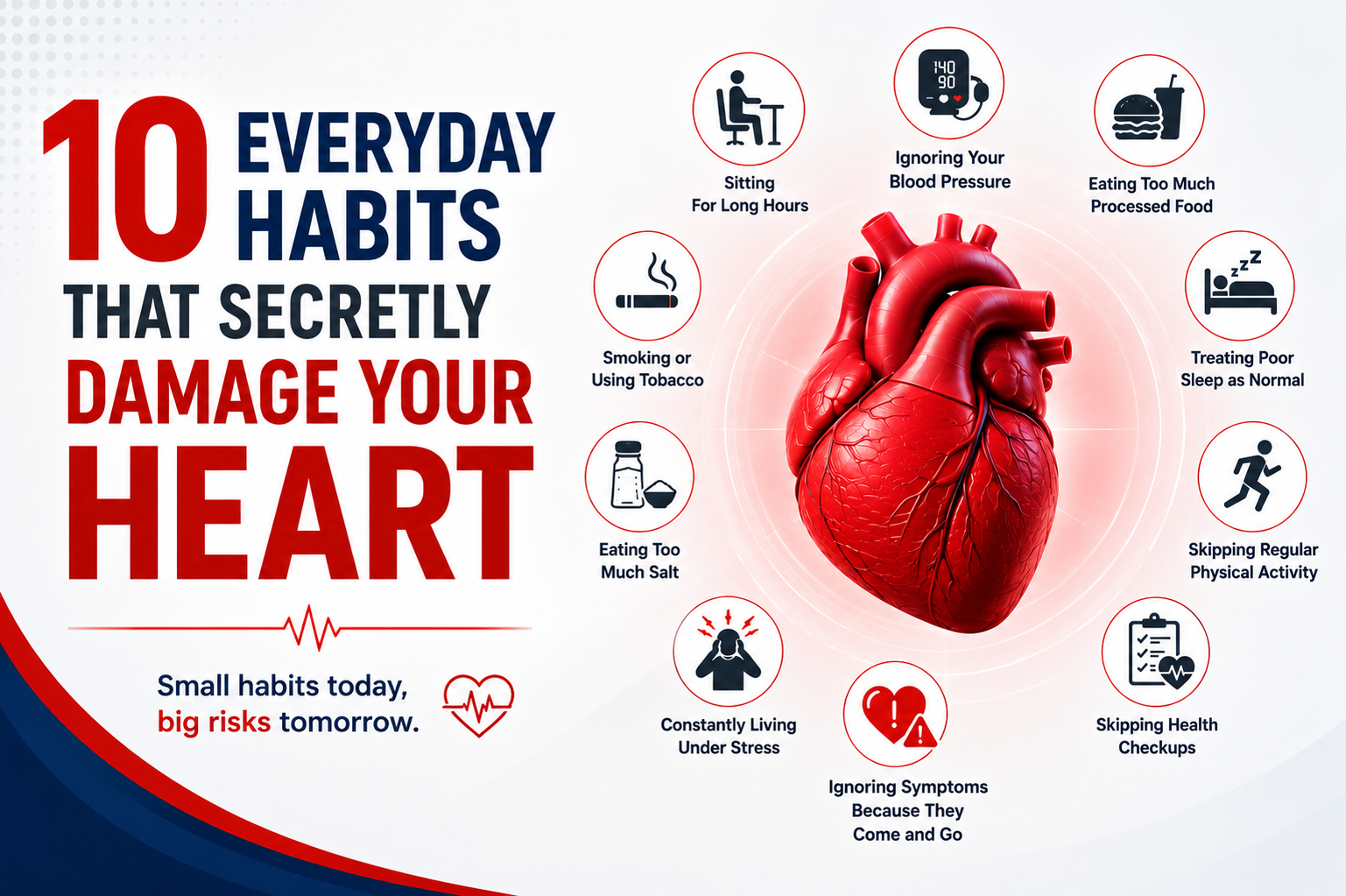
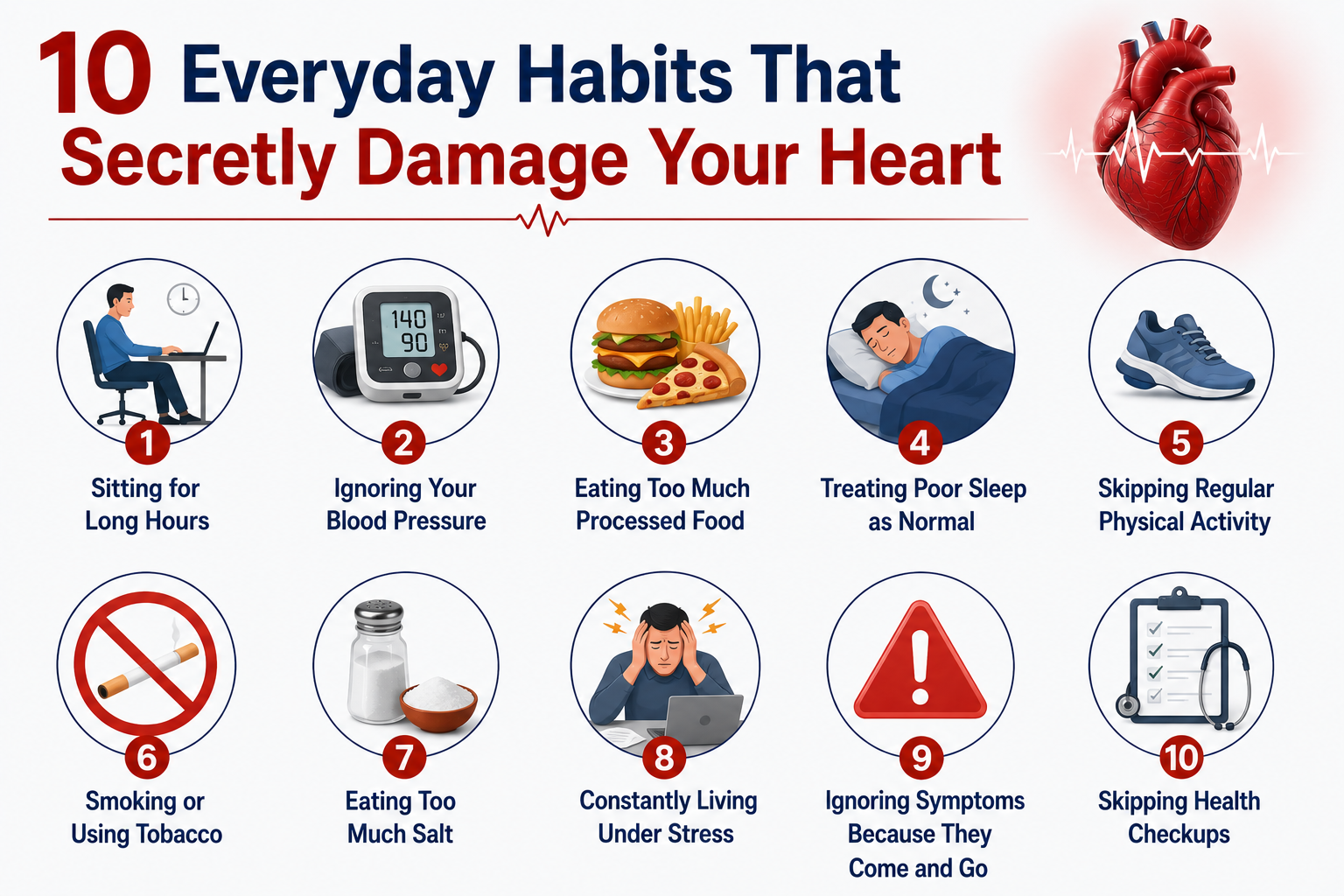
10 Everyday Habits That Secretly Damage Your Heart
August 20, 2026
admindrshridhar
0 Comments
Active Heart Clinic: Comprehensive Cardiac and Vascular Care in Mumbai
Heart disease does not always begin with obvious warning signs. Sometimes, the habits we repeat every day can gradually increase our cardiovascular risk without us realising it.
Skipping exercise, sleeping poorly, eating too much processed food, or spending most of the day sitting may seem harmless individually. But over time, these habits can contribute to high blood pressure, unhealthy cholesterol levels, weight gain, diabetes, and other conditions that affect heart health.
If you want to protect your heart for the long term, start by identifying the everyday habits that may be working against you.
1. Sitting for Long Hours
Long periods of sitting are common, especially for people who work at a desk or spend several hours commuting.
A sedentary lifestyle is associated with several cardiovascular risk factors, including obesity, high blood pressure, and poor metabolic health.
What to do: Get up regularly, walk around, stretch, and include purposeful physical activity in your daily routine.
2. Ignoring Your Blood Pressure
High blood pressure is often called a “silent” condition because many people may not notice symptoms.
When blood pressure remains elevated over time, it places additional strain on the heart and blood vessels and can increase the risk of cardiovascular complications.
What to do: Check your blood pressure periodically, particularly if you have risk factors or have previously been advised to monitor it.
3. Eating Too Much Processed Food
Packaged snacks, processed meats, fast food, and foods high in salt, saturated fat, or added sugars can make it harder to maintain a heart-healthy diet.
Frequently consuming high-sodium foods can also contribute to elevated blood pressure in susceptible individuals.
What to do: Build meals around vegetables, fruits, whole grains, legumes, nuts, and other minimally processed foods, while limiting highly processed options.
4. Treating Poor Sleep as Normal
Sleep is not simply “downtime.” Consistently poor or insufficient sleep can affect blood pressure, metabolism, stress levels, and overall cardiovascular health.
Late-night screen use, irregular sleep schedules, excessive caffeine, and long working hours can all interfere with healthy sleep patterns.
What to do: Aim for a consistent sleep schedule and create a relaxing routine before bedtime.
5. Skipping Regular Physical Activity
You don’t have to become an athlete to support your heart.
Regular physical activity helps improve cardiovascular fitness and can support healthy blood pressure, weight, blood sugar, and cholesterol levels.
What to do: Choose activities you can maintain consistently, such as brisk walking, cycling, swimming, or other suitable forms of exercise.
6. Smoking or Using Tobacco
Tobacco is one of the major preventable risk factors for cardiovascular disease. Smoking can damage blood vessels and contribute to the development of atherosclerosis.
Even if smoking has been part of your routine for years, quitting can improve cardiovascular health.
What to do: If you use tobacco, consider seeking professional support to develop a suitable quitting plan.
7. Eating Too Much Salt
Many people think of salt only as the salt they add while cooking. However, processed and packaged foods can also contain substantial amounts of sodium.
Excessive sodium intake can contribute to high blood pressure in some people, which is an important cardiovascular risk factor.
What to do: Read food labels and reduce your intake of heavily salted and highly processed foods.
8. Constantly Living Under Stress
A stressful day is normal. Constant, unmanaged stress is different.
Chronic stress can influence sleep, eating behaviour, physical activity, blood pressure, and other factors associated with cardiovascular health.
What to do: Make time for activities that help you manage stress, such as walking, relaxation exercises, hobbies, social connection, or mindfulness practices.
If stress feels overwhelming or persistent, professional support may also be helpful.
9. Ignoring Symptoms Because They Come and Go
One of the most concerning habits is ignoring symptoms simply because they disappear.
Chest discomfort, unusual breathlessness, unexplained fatigue, dizziness, or reduced exercise tolerance can have many causes. However, recurring symptoms—especially those triggered by physical activity—should not automatically be dismissed as acidity, tiredness, or ageing.
What to do: Discuss recurring or unexplained symptoms with a healthcare professional.
10. Skipping Health Checkups
Feeling healthy does not always mean your cardiovascular risk is low.
Conditions such as high blood pressure, diabetes, and abnormal cholesterol can develop without obvious symptoms.
Regular health assessments can help identify important risk factors early, allowing you and your doctor to address them before they contribute to more serious problems.
What to do: Ask your doctor which health checks are appropriate for your age, medical history, and risk factors.
Small Changes Can Make a Big Difference
You don’t need to change your entire lifestyle overnight.
Start with manageable improvements:
Walk more throughout the day
Reduce highly processed foods
Watch your salt intake
Maintain a regular sleep schedule
Avoid tobacco
Manage stress
Monitor blood pressure and cholesterol
Maintain a healthy weight
Stay physically active
Don’t ignore persistent or unusual symptoms
The goal is consistency rather than perfection.
When Should You Seek Medical Attention?
Lifestyle changes are important for prevention, but they cannot replace medical evaluation when symptoms occur.
Seek prompt medical attention for unexplained or recurring chest pain, particularly if it occurs during physical activity or is associated with breathlessness, sweating, dizziness, nausea, or discomfort spreading to the arm, shoulder, jaw, neck, or back.
Sudden or severe symptoms may require emergency medical care.
Consult a Cardiothoracic and Vascular Surgeon in Mumbai
Heart health involves more than treating disease after it develops. Recognising cardiovascular risk factors and seeking timely evaluation can play an important role in protecting your long-term health.
Dr. Shridhar G. Padagatti, a Cardiothoracic and Vascular Surgeon in Mumbai, provides care for patients with cardiovascular and vascular conditions. If you have recurring symptoms or have been diagnosed with significant heart or vascular disease, an appropriate medical evaluation can help determine the next step.
Several habits can increase cardiovascular risk over time, including smoking, physical inactivity, unhealthy eating patterns, excessive salt intake, poor sleep, chronic unmanaged stress, and ignoring conditions such as high blood pressure or high cholesterol.
Long periods of inactivity are associated with cardiovascular risk factors such as obesity, high blood pressure, and poor metabolic health. Breaking up sitting time with regular movement and maintaining an active lifestyle can support better overall health.
Consistently poor or insufficient sleep can affect blood pressure, metabolism, stress, and other factors related to cardiovascular health. Maintaining a regular sleep schedule and addressing persistent sleep problems can support overall heart health.
Healthy lifestyle habits can help reduce several cardiovascular risk factors, although they cannot eliminate every cause of heart disease. Genetics, age, existing medical conditions, and other factors also influence cardiovascular risk.
If you have been diagnosed with significant coronary artery disease, require evaluation for possible cardiac surgery, or have another cardiovascular condition that may require surgical management, your doctor may recommend consultation with a Cardiothoracic and Vascular Surgeon. For new or unexplained symptoms, start with an appropriate medical evaluation rather than self-diagnosing.
Final Takeaway
Your heart is affected not only by what happens occasionally, but also by what you do repeatedly.
A sedentary lifestyle, unhealthy diet, poor sleep, tobacco use, unmanaged stress, and ignoring important health checks can gradually increase cardiovascular risk. The good news is that many of these habits can be changed.
Small, consistent improvements today can support a healthier heart for years to come.
Leave a Comment