Top Heart Conditions Treated by Dr. Shridhar G. Padagatti in Mumbai
September 1, 2026
admindrshridhar
0 Comments
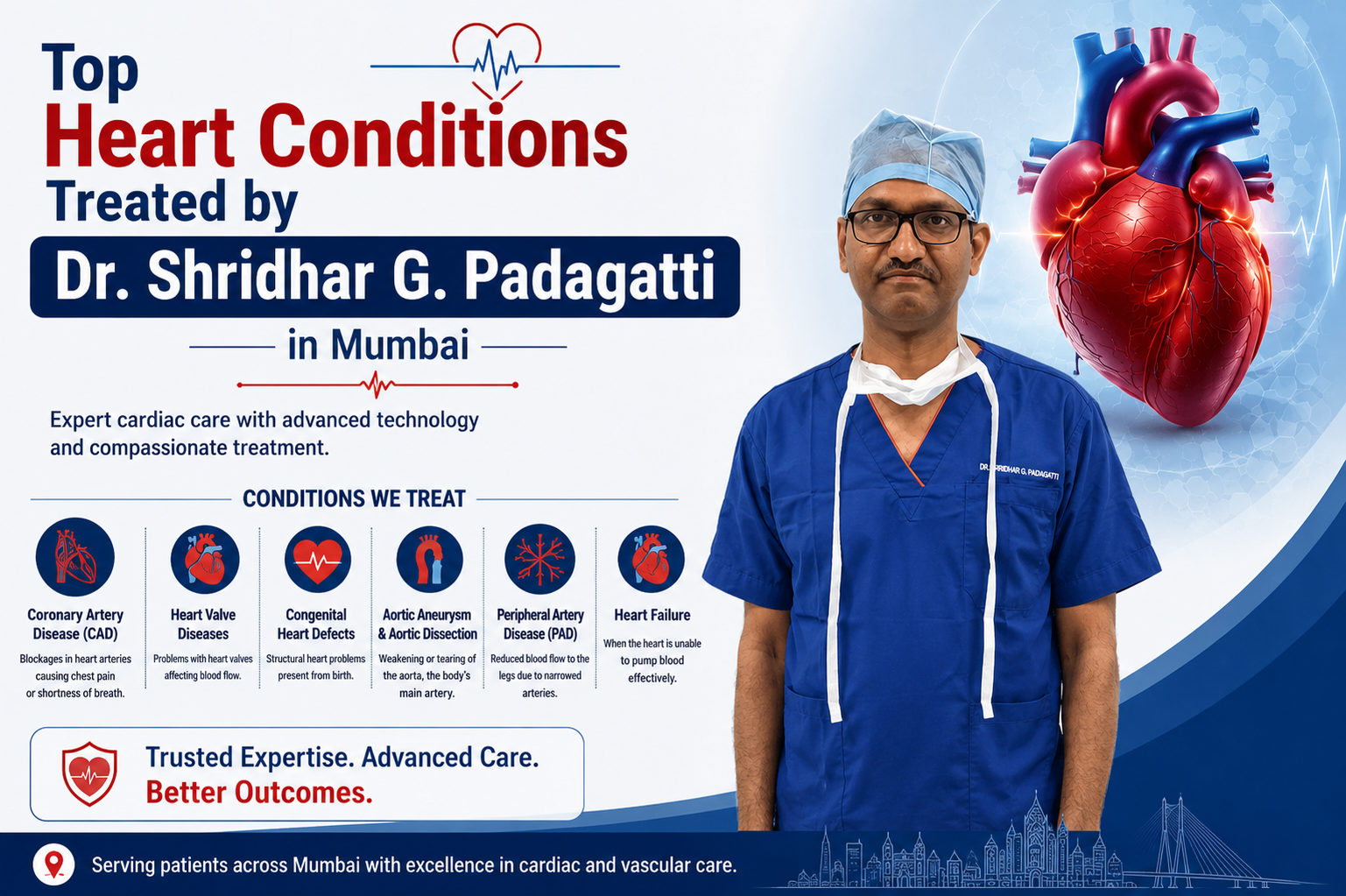
Top Heart Conditions Treated by Dr. Shridhar G. Padagatti in Mumbai
Heart disease can affect people in different ways, from blocked coronary arteries and heart valve problems to conditions involving the aorta and blood vessels. While some cardiovascular conditions can be managed with medicines and lifestyle changes, others may require specialized surgical treatment.
For patients looking for a cardiac and vascular surgeon in Mumbai, understanding the conditions treated and the available surgical options can make the treatment journey easier to navigate.
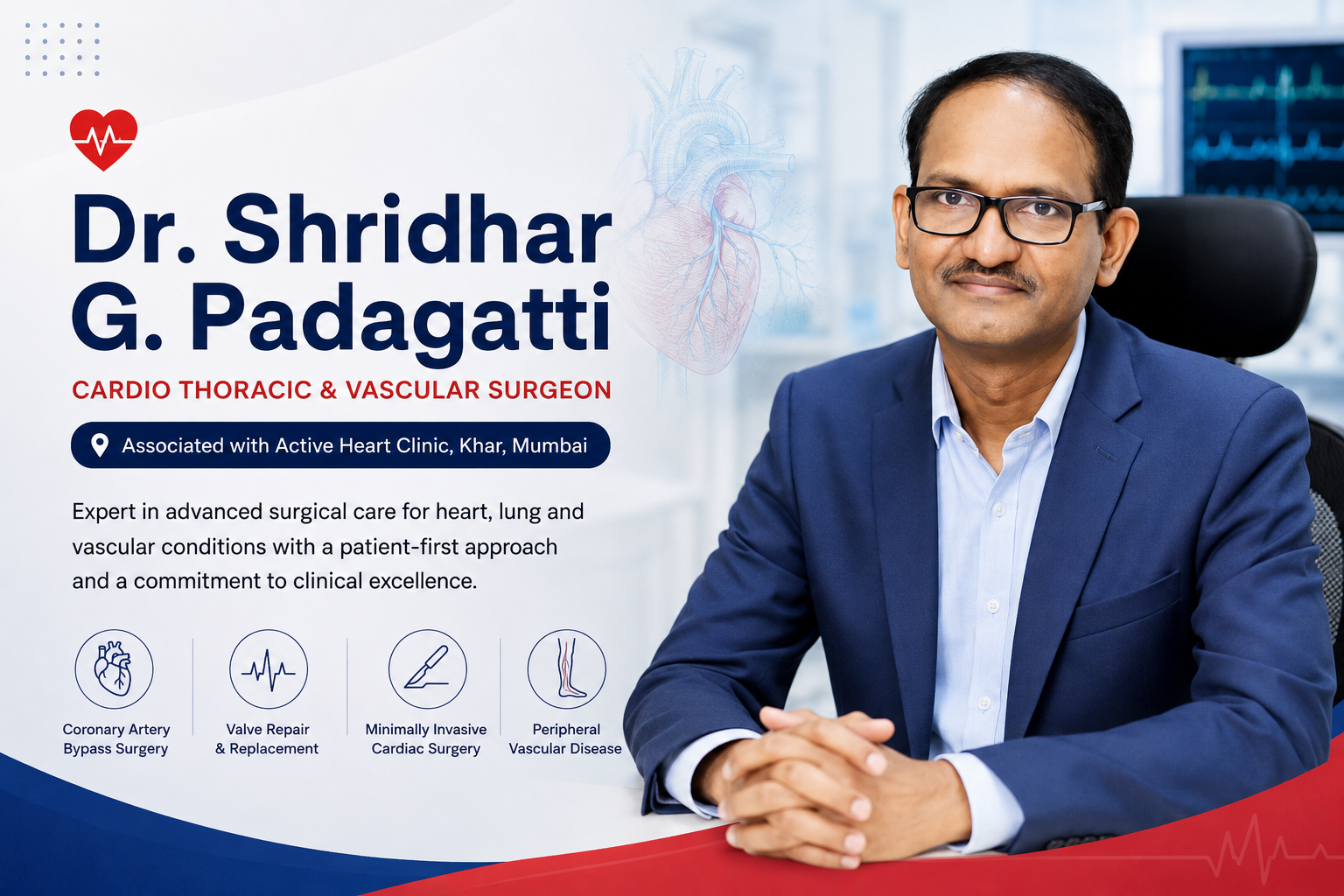
Dr. Shridhar G. Padagatti is a Cardio Thoracic and Vascular Surgeon associated with Active Heart Clinic in Khar, Mumbai. His areas of surgical practice include coronary artery bypass surgery, valve repair and replacement, minimally invasive cardiac surgery, and peripheral vascular disease. His official profile also lists experience with complex cardiac, vascular, and thoracic procedures.
1. Coronary Artery Disease and Blocked Heart Arteries
Coronary artery disease occurs when the arteries supplying blood to the heart become narrowed or blocked, usually because of plaque buildup.
Common symptoms may include:
Chest pain or pressure
Breathlessness
Fatigue
Discomfort during physical activity
Pain that may spread to the arm, jaw, back, or shoulder
Depending on the number, location, and severity of blockages, treatment may involve medicines, angioplasty and stenting, or coronary artery bypass grafting (CABG).
Dr. Shridhar G. Padagatti performs both on-pump and off-pump CABG, including advanced revascularization approaches. His clinic specifically lists Off-Pump CABG and On-Pump CABG among its cardiac surgery services.
2. Heart Valve Disease
Heart valves regulate the movement of blood through the four chambers of the heart. When a valve becomes narrowed or fails to close properly, the heart may have to work harder to maintain adequate blood flow.
Two common valve problems are:
Stenosis – the valve becomes narrowed or stiff.
Regurgitation – the valve does not close completely, allowing blood to flow backward.
Symptoms can include breathlessness, tiredness, dizziness, swelling, and reduced exercise tolerance.
Treatment depends on the affected valve and severity of the condition. In suitable patients, valve repair may be possible, while others may require valve replacement.
Valve replacement and repair are among the services listed by Active Heart Clinic. Dr. Padagatti’s surgical experience also includes mitral valve replacement, aortic valve replacement, and double valve replacement.
Not every patient with valve disease needs surgery immediately. However, progressive valve disease can eventually affect the heart’s pumping function.
A cardiac surgeon may be involved when:
Symptoms are becoming more frequent
The valve disease is severe
Heart function is being affected
The heart chambers are enlarging
Medical treatment is no longer sufficient
Early evaluation can help determine whether continued monitoring, medication, valve repair, or valve replacement is appropriate.
4. Conditions Requiring Minimally Invasive Cardiac Surgery
Advances in cardiac surgery have made it possible to perform selected procedures through smaller incisions in appropriately chosen patients.
Minimally invasive cardiac surgery may offer potential advantages such as smaller surgical incisions, reduced tissue trauma, and recovery benefits for suitable patients. However, not every heart condition or patient is appropriate for a minimally invasive approach.
Active Heart Clinic lists minimally invasive cardiac surgery as one of its specialties. Dr. Padagatti has also published information about keyhole heart surgery and minimally invasive approaches for selected valve and structural heart procedures.
5. Peripheral Vascular Disease
Cardiovascular health is not limited to the heart. Peripheral vascular disease can affect arteries supplying the legs and other parts of the body.
Peripheral artery disease may cause:
Leg pain while walking
Calf cramps
Cold feet
Numbness or weakness
Changes in skin color
Slow-healing wounds
Early diagnosis is important because reduced circulation can progress and may become limb-threatening in severe cases.
Peripheral Vascular Disease is specifically listed among the services provided through Dr. Shridhar’s practice.
6. Aortic and Major Blood Vessel Conditions
The aorta is the body’s largest artery and carries blood from the heart to the rest of the body. Diseases affecting the aorta can sometimes become serious and require specialist assessment.
Aortic conditions may include aneurysms and other structural abnormalities. Treatment depends on the location, size, progression, symptoms, and overall health of the patient.
Because some aortic conditions can become emergencies, sudden severe chest, back, or abdominal pain should receive immediate medical attention.
Some patients may require surgery for structural or congenital conditions affecting the heart. Dr. Padagatti’s listed surgical experience includes atrial septal defect repair, ventricular septal defect repair, and atrial myxoma excision.
The decision to operate depends on detailed cardiac assessment, imaging, symptoms, heart function, and the patient’s overall health.
8. Thoracic Conditions That May Require Surgery
Cardiothoracic surgery also includes conditions involving organs within the chest. Dr. Shridhar’s listed services include lung disease treatment through procedures such as decortication and lobectomy.
These procedures may be considered for selected lung and thoracic conditions when surgery is medically appropriate.
Why Choose a Specialized Cardio Thoracic and Vascular Surgeon?
Choosing a surgeon for heart or vascular treatment is an important decision. Patients should consider the surgeon’s qualifications, surgical experience, hospital affiliations, treatment approach, and ability to explain the available options clearly.
Dr. Shridhar G. Padagatti completed his MBBS at JNMC, Belgaum, MS in General Surgery at Goa Medical College, and super-specialization in Cardiovascular and Thoracic Surgery at Seth GS Medical College and KEM Hospital, Mumbai. His official profile highlights experience in cardiac, vascular, and thoracic procedures.
His practice, Active Heart Clinic, is located in Khar West, Mumbai, and focuses on cardiac and vascular surgical care.
When Should You Consult a Cardiac Surgeon?
You should consider specialist evaluation if you have:
Persistent or recurrent chest discomfort
Breathlessness during routine activities
Diagnosed multiple coronary blockages
Significant heart valve disease
Reduced heart function
Leg pain associated with walking
Non-healing wounds on the feet
A diagnosed vascular condition
A condition for which your cardiologist has recommended surgery
Chest pain accompanied by severe breathlessness, fainting, cold sweating, or pain spreading to the arm or jaw can indicate a medical emergency. Seek emergency medical care rather than waiting for a routine appointment.
His listed areas of surgical practice include coronary artery disease requiring CABG, heart valve conditions requiring repair or replacement, selected minimally invasive cardiac procedures, peripheral vascular disease, and several complex cardiac and thoracic conditions.
Yes. Active Heart Clinic lists both Off-Pump CABG and On-Pump CABG among its cardiac surgery services. His profile also describes experience with complex bypass procedures, including LIMA-RIMA Y off-pump CABG.
No. Treatment depends on the severity and location of blockages, symptoms, heart function, overall health, and previous treatments. Some patients may benefit from medication or angioplasty, while others may require CABG.
Valve surgery may be considered when valve disease becomes severe, causes significant symptoms, affects heart function, or creates a risk of further cardiac damage. The appropriate treatment should be determined after a detailed evaluation.
Dr. Shridhar G. Padagatti’s Active Heart Clinic is located in Khar West, Mumbai. His official website lists the clinic at 001, Himath Ghar, Plot No. 539-A, opposite Khatri Manzil, 13th Road, Khar (West).
Final Takeaway
Chest pain while climbing stairs is not something to routinely dismiss as tiredness, acidity, or lack of fitness. Although there are many possible causes, exertional chest pain can be an important warning sign of reduced blood flow to the heart.
Recognising symptoms early and obtaining the right medical evaluation can help identify heart disease and determine appropriate treatment. If you experience unexplained or recurring chest pain, speak with a qualified medical professional rather than self-diagnosing the cause.
Leave a Comment