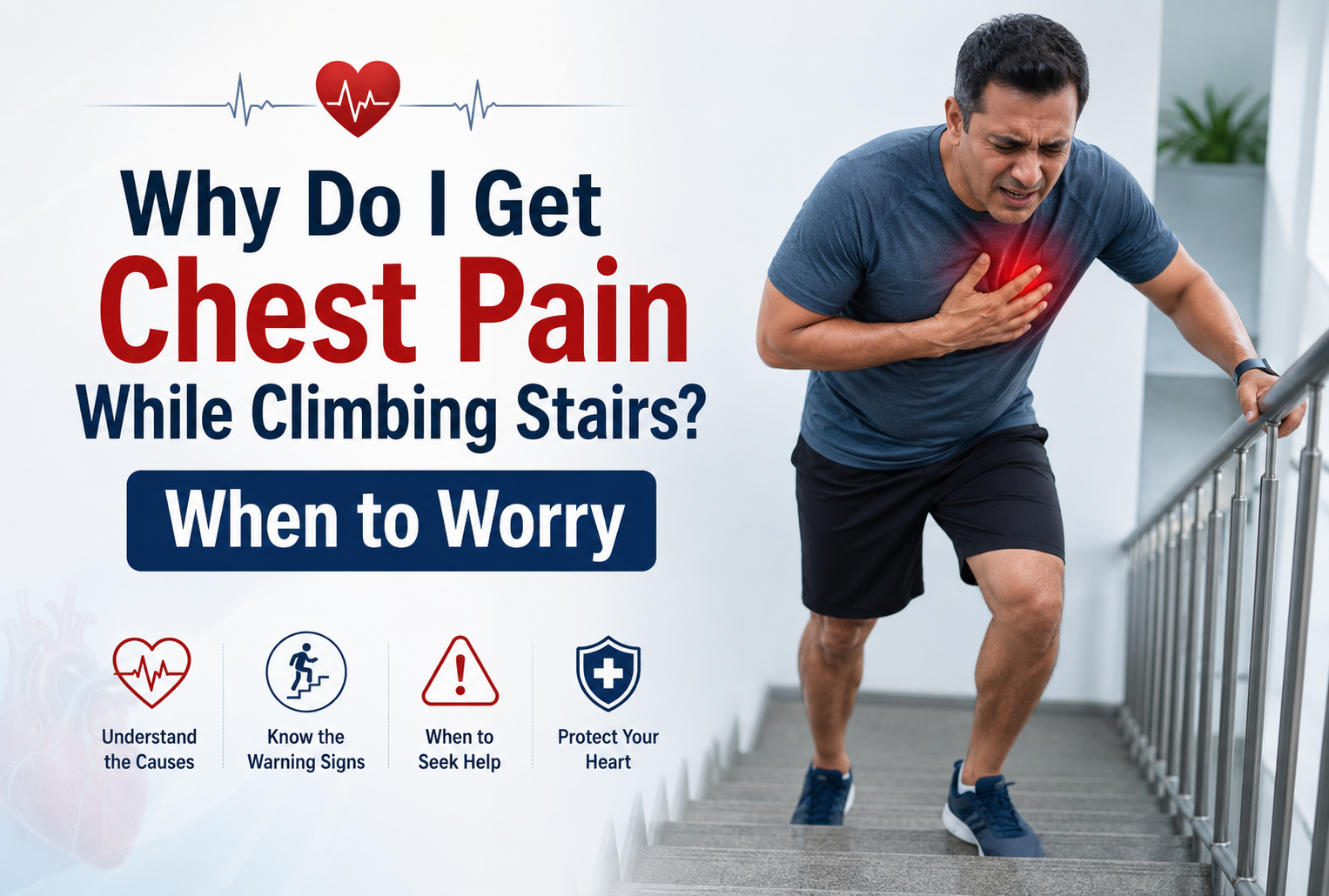
Why Do I Get Chest Pain While Climbing Stairs? When to Worry
August 22, 2026
admindrshridhar
0 Comments
Why Do I Get Chest Pain While Climbing Stairs? When to Worry
Climbing stairs is a common part of everyday life, but if you regularly experience chest pain while climbing stairs, it should not be ignored. While breathlessness or mild muscle discomfort can sometimes occur after physical exertion, chest pressure, tightness, heaviness, or pain during activity may be a warning sign of an underlying heart or blood vessel problem.
Understanding when chest pain is harmless and when it requires medical attention can help you seek treatment at the right time.
Why Can Climbing Stairs Cause Chest Pain?
When you climb stairs, your body needs more oxygen and your heart has to pump blood faster. If the arteries supplying blood to the heart are narrowed or blocked, the heart muscle may not receive enough oxygen during exertion.
This reduced oxygen supply can cause angina, which may feel like:
Pressure or tightness in the chest
A squeezing or heaviness sensation
Burning or discomfort behind the breastbone
Pain spreading to the left or both arms
Discomfort in the shoulder, neck, jaw, or back
Breathlessness during physical activity
Unusual sweating, nausea, or weakness
Chest discomfort that appears predictably during exertion and improves after resting can be particularly important to evaluate.
Is Chest Pain While Climbing Stairs Always a Heart Problem?
No. Chest pain can have several causes. Muscle strain, acid reflux, respiratory conditions, anxiety, or inflammation around the chest can also cause discomfort.
However, chest pain triggered by physical activity should not automatically be assumed to be muscular or gastric, particularly if it is new, recurring, worsening, or associated with breathlessness.
Heart-related chest pain deserves prompt medical evaluation because coronary artery disease can sometimes progress without obvious symptoms at rest.
When Should You Worry About Chest Pain?
Pay particular attention if chest pain:
Starts when walking uphill or climbing stairs
Occurs after physical exertion and improves with rest
Is becoming more frequent or severe
Lasts longer than usual
Is accompanied by shortness of breath
Causes dizziness, sweating, nausea, or unusual weakness
Spreads to the arm, jaw, shoulder, neck, or back
Occurs even with minimal activity or while resting
A sudden, severe, or persistent chest pain accompanied by difficulty breathing, fainting, cold sweating, or other serious symptoms requires immediate emergency medical attention.
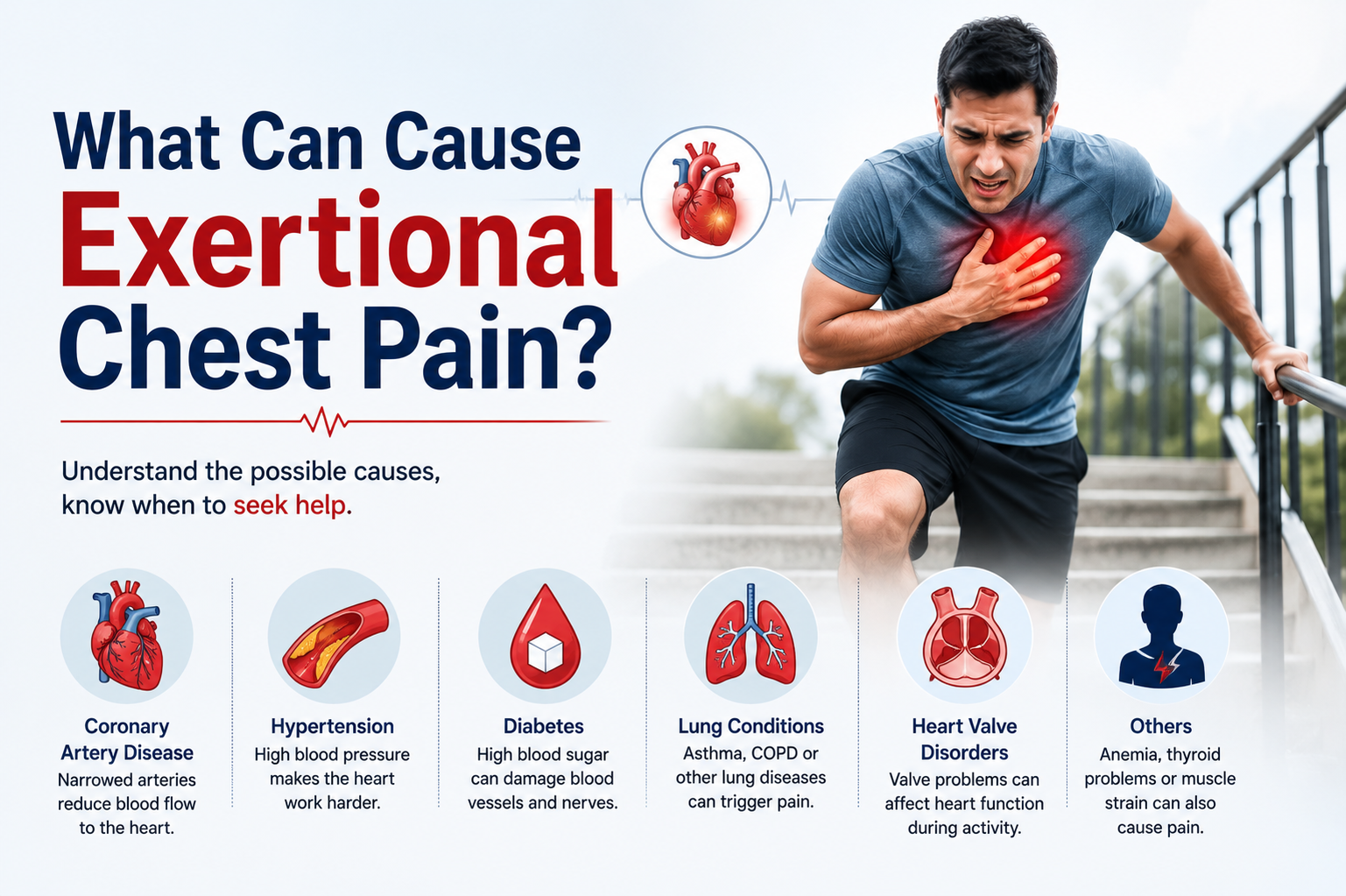
What Can Cause Exertional Chest Pain?
1. Coronary Artery Disease
One of the important causes of exertional chest pain is coronary artery disease. Plaque buildup can narrow the arteries supplying blood to the heart. During exercise, the heart requires more oxygen, and the reduced blood flow may produce angina.
2. Angina
Angina is chest discomfort caused by inadequate oxygen-rich blood reaching the heart muscle. It may occur during physical activity and improve when the heart’s workload decreases.
3. Heart Valve Problems
Certain valve conditions can make the heart work harder. In some patients, this may lead to chest discomfort, breathlessness, fatigue, or dizziness during exertion.
4. Lung or Respiratory Conditions
Breathing disorders can cause chest discomfort and shortness of breath while climbing stairs. A proper medical assessment can help distinguish cardiac and respiratory causes.
5. Musculoskeletal Pain
Pain from the muscles, ribs, joints, or chest wall can become more noticeable with movement. This type of pain may behave differently from typical heart-related discomfort.
6. Acid Reflux
Gastroesophageal reflux can cause burning or discomfort in the chest and may sometimes be mistaken for heart-related pain.
Because different conditions can produce similar symptoms, self-diagnosis is not recommended.
What Should You Do If Chest Pain Happens While Climbing Stairs?
If chest discomfort starts during exertion, stop the activity and rest. If the symptoms are severe, persistent, or associated with symptoms such as breathlessness, sweating, fainting, or pain spreading to the arm or jaw, seek emergency medical care immediately.
If the discomfort repeatedly occurs during activities such as climbing stairs or brisk walking, arrange a medical evaluation rather than continuing to exercise through the symptoms.
Depending on your symptoms and medical history, a doctor may recommend investigations such as an ECG, echocardiogram, blood tests, stress testing, CT coronary evaluation, or other cardiac investigations.
Who Is More Likely to Experience Heart-Related Chest Pain?
The risk of coronary artery disease increases with factors such as:
High blood pressure
Diabetes
High cholesterol
Smoking or tobacco use
Obesity
Physical inactivity
Increasing age
A family history of heart disease
Previous cardiovascular disease
Having one or more risk factors does not mean every episode of chest pain is cardiac, but it makes appropriate evaluation more important.
When Should You See a Cardiothoracic and Vascular Surgeon in Mumbai?
If chest pain has been diagnosed as being related to coronary artery disease or another condition requiring surgical evaluation, consultation with an experienced Cardiothoracic and Vascular Surgeon (CVTS surgeon) may be recommended.
Dr. Shridhar G. Padagatti provides evaluation and surgical care for cardiovascular and vascular conditions in Mumbai. The appropriate treatment depends on the individual’s symptoms, test results, overall health, and severity of the underlying condition.
Early evaluation can help identify cardiovascular problems before they become more serious.
Chest pain that consistently occurs during exertion may happen because the heart requires more oxygen while exercising. If blood flow through the coronary arteries is restricted, this increased demand can trigger angina. Other causes are also possible, so recurring exertional chest pain should be medically evaluated.
Not necessarily. Exertional chest pain can be caused by angina or several non-cardiac conditions. However, new, severe, worsening, or persistent chest pain—especially when accompanied by breathlessness, sweating, nausea, dizziness, or pain spreading to the arm, jaw, or back—can indicate a medical emergency and requires immediate attention.
Yes, acid reflux can cause burning or discomfort in the chest. However, heart-related chest pain can sometimes feel similar to acidity. If chest discomfort repeatedly occurs with physical exertion, it is safer to have the heart evaluated rather than assuming it is caused by acidity.
Yes. Stop the activity if chest pain develops during exercise. Recurrent exertional chest pain should be evaluated by a healthcare professional before you resume strenuous activity. Do not try to push through unexplained chest discomfort.
You should seek medical evaluation for recurring chest pain, particularly when it occurs during physical activity. If investigations identify coronary artery disease or another cardiovascular condition that may require surgical treatment, a Cardiothoracic and Vascular Surgeon in Mumbai can assess whether surgical management is appropriate.
Final Takeaway
Chest pain while climbing stairs is not something to routinely dismiss as tiredness, acidity, or lack of fitness. Although there are many possible causes, exertional chest pain can be an important warning sign of reduced blood flow to the heart.
Recognising symptoms early and obtaining the right medical evaluation can help identify heart disease and determine appropriate treatment. If you experience unexplained or recurring chest pain, speak with a qualified medical professional rather than self-diagnosing the cause.
Leave a Comment